The Bowerbird Method™
Communications Strategy
Case Studies
THE METHOD IN PRACTICE
The professional thinking behind the tools.
These real-world case studies demonstrate how structured audience mapping, positioning, and proof translate directly into commercial clarity, earning trust.
CASE STUDY · KNOW YOUR PEOPLE
Kai Duck: Start with your people, not publicity.
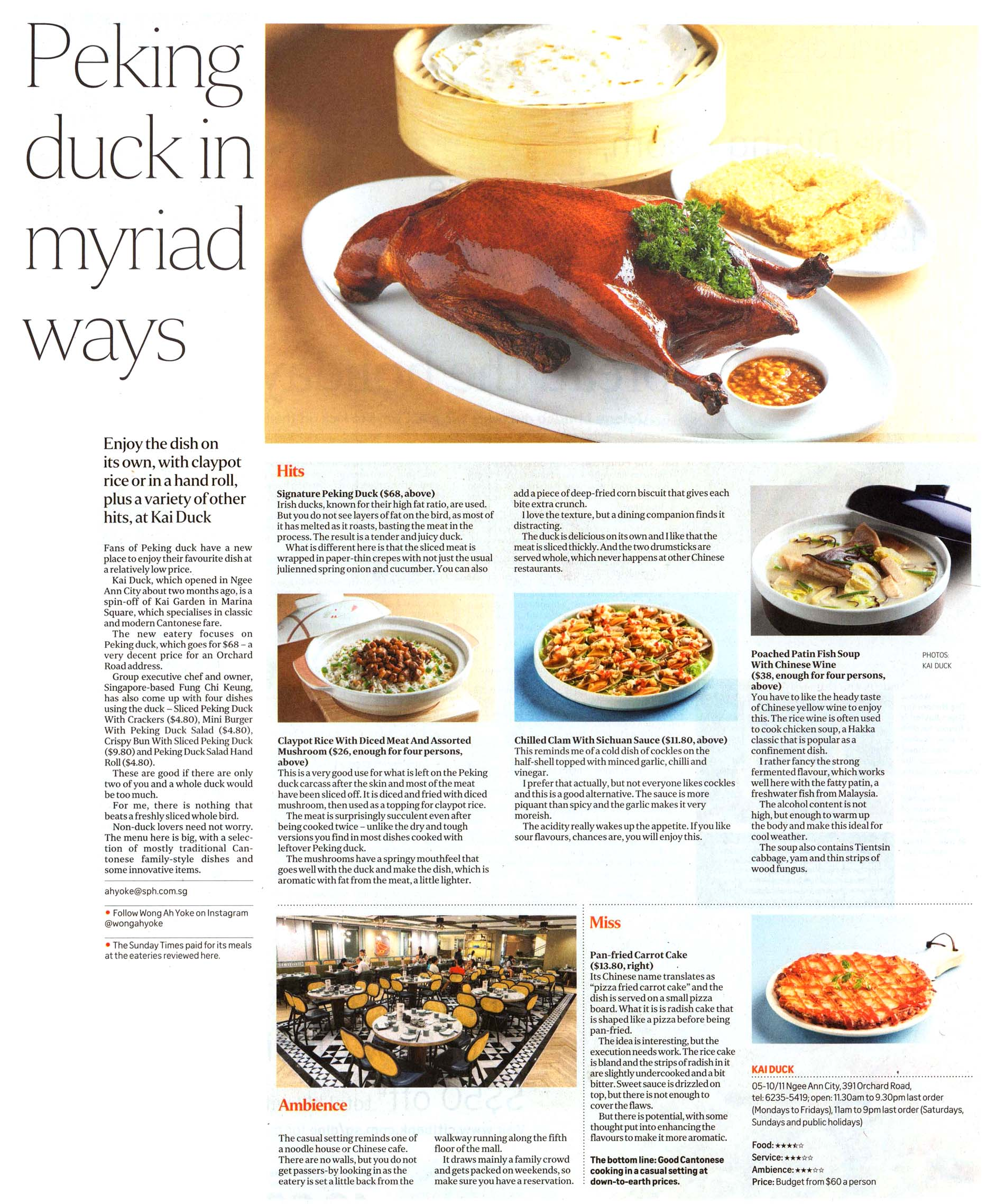
The Challenge: Kai Duck entered a highly competitive dining market with a distinctive proposition: contemporary Chinese cuisine offered at a more accessible price point for younger diners. The challenge wasn't simply to generate noise; it was to give younger diners a compelling reason to visit and food media a credible story worth telling.
The Strategic Work: The programme identified what each specific group needed to understand. For diners, the story centred on an accessible dining experience worth sharing. For the media, it became a clearly defined concept supported by a credible culinary point of view and dishes that brought the story to life. This understanding directly informed the positioning, press assets, chef biography, interview preparation, and the tasting experience.
The Outcome: Often restaurants only fill at times when there is a storm of publicity. With its audiences (young millennials, foodies, office workers, mall shoppers) comprehending Kai Duck’s traditional, yet modernised menu, the restaurant has experienced repeat business and has been open for years.
The Bowerbird Lesson: Publicity becomes more effective when it begins with a simple question: Who are we trying to interest, and why should this matter to them? Every audience enters through a different door, but they should all arrive at the same understanding.
Each audience group enters through a different door, yet arrives at the same house.
CASE STUDY · KNOW WHO YOU ARE
EGN: Expertise turned into Authority
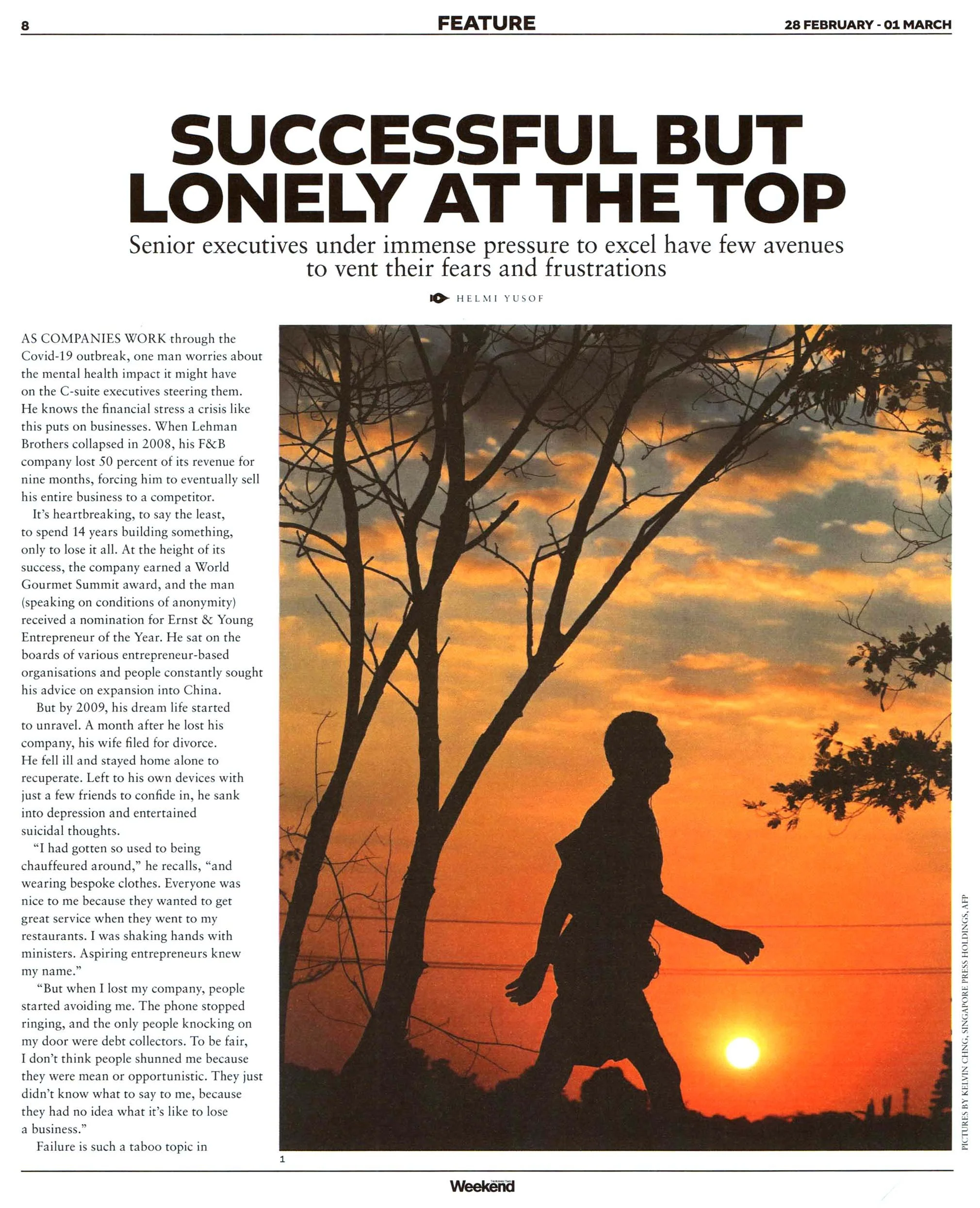
The Challenge: The CEO of EGN in Asia championed a sensitive topic that many senior leaders recognise privately but discuss cautiously in public: executive loneliness. The challenge wasn't simply to generate visibility; it was to transform a deeply personal issue into a credible, constructive, and useful conversation without reducing it to a slogan.
The Strategic Work: The programme developed a clear narrative around executive loneliness, peer support, and the importance of trusted professional communities. This core narrative became the foundation for sustained media commentary in The Business Times, authored articles, interviews, and international speaking engagements.
The Outcome: As comprehension built from consistent message delivery through advocacy, Nick and his team grew EGN across the region, from Singapore then Indonesia and on to Malaysia. He’s now a highly rated author and sought after keynote speaker across the world.
The Bowerbird Lesson: Thought leadership is most powerful when it gives a name to something the audience already recognises but hasn't yet been able to articulate. Reputation is built by messages; trust is secured by actions.
Reputation is built by messages. Trust is built by actions.
CASE STUDY · PROOF OVER PROMISES
Cell-ID: making complex science understandable.
CNA news coverage of Cell-ID’s portable molecular diagnostic system.
The Challenge: Cell-ID developed a portable molecular diagnostic system built on sophisticated science. While the technology was highly credible, buyers, government agencies, journalists, and technical specialists needed a clear way to understand what it did, why it mattered, and how to evaluate it.
The Strategic Work: A journalist translated the dense science into audience-specific explanations, creating parallel technical and mainstream storylines. Using this articulation, the PR team built the messaging frameworks, briefing materials, Q&A documents, media assets, and launch materials. This separated the communication challenge into distinct, digestible components: market need, product mechanism, supporting evidence, and human relevance.
The Immediate Outcome:
A 2,000-unit hospital order placed within a single week.
Direct contact initiated by NASA technical teams.
Complete corporate acquisition within twelve months.
The Lesson: Proof is only valuable when the intended audience can understand it. Complex technical products rarely fail because the technology is weak; they fail because the message is impenetrable.
Proof is useful when the intended audience comprehends it.
These case studies draw on professional communications programmes completed before this method was packaged as an educational product. They illustrate the professional thinking behind the approach. Outcomes were influenced by many commercial, organisational, and market factors, and should not be interpreted as guaranteed results.
Disclaimer
Frequently Asked Questions
-
They demonstrate the professional practices from which the Method was distilled and drawn from work across technology, science, fintech, cybersecurity, education, data infrastructure, major events and corporate reputation.
-
No. The cases illustrate the professional process behind the Method. They are not claims that the packaged product itself caused those historical outcomes.
-
The cases are illustrative, not a promise of outcomes. Results depend on the quality of your own inputs, decisions, evidence, implementation and market conditions.
-
The Method was developed by Cyber PR Pty Ltd from nearly thirty years of communications practice across Australia and Asia-Pacific.